Legacy · Television series · 2001–2005
Sexto Sentido: the series that brought rights into the living room
Produced by Puntos de Encuentro and premiered in February 2001 on Nicaragua's Canal 2, Sexto Sentido followed a group of young people in Managua to talk about what no one was discussing on broadcast television: sexuality, violence, abortion, sexual diversity, HIV, masculinities and the right to decide.
The episodes
Sexto Sentido, from the first episode
Playlist with the episodes available on the Puntos de Encuentro Nicaragua channel. In Spanish.
Episodes are split into parts. Use the playlist menu to move between them.
In numbers
One series, one generation
Sources: Redalyc; La Prensa (2001, 2007, 2022); Alliance Magazine; IMDb
Why it matters
Edutainment with evidence
Sexto Sentido was more than a telenovela. Each episode was accompanied by the DKY FM radio program, teacher guides and a network of organizations that carried the conversation into schools and neighborhoods. Its model was externally evaluated by PATH, Horizons and CIDS at UNAN-León, which documented changes in attitudes and conversations about sexuality, violence and rights among young audiences.
It received the Latino Award for Excellence at the Shine Awards (2004) and the Outfest Freedom Award (Los Angeles). In 2007 it became the first Nicaraguan series to reach U.S. television.
What the evaluation says
Measured change, not assumptions
Between 2003 and 2005, PATH, the Horizons program of the Population Council and CIDS at UNAN-León evaluated the We're Different, We're Equal strategy, with Sexto Sentido at its center, using panel surveys of young people aged 13 to 24 in León, Estelí and Juigalpa. Some results:
- Frequent viewers were 43% more likely to know the family violence law and to identify a center where they could ask for help.
- In the Entre Amigas project (2002–2004), of every 100 adolescent girls who responded assertively to risk situations, 7 are attributable exclusively to watching Sexto Sentido and 15 to the combination of the series with community work: an impact similar to the face-to-face intervention, at far greater reach and lower cost.
- The evidence suggests larger net change among groups that started from lower values: men, adolescents aged 13 to 18, and the most conservative municipality, Juigalpa.
- The cost per adolescent or young viewer was about US$0.04 per episode and US$1.80 for the three seasons evaluated.
The series captured up to 70% of the youth audience in its time slot and aired without censorship in a country with strong religious influence, addressing sexual abuse, emergency contraception, sexual diversity and abortion with humor and without sermons. The full evaluation (2008, in Spanish) can be downloaded from the legacy library.
More from the archive
Around the series

A retrospective of the television program.
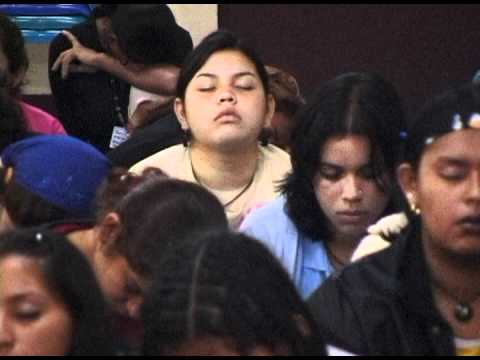
Two decades of work, told by the people who did it.

One of the channel's most-watched videos, with more than 1.5 million views.
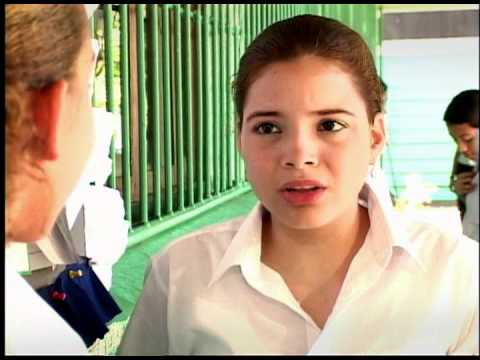
Campaign for young people's right to information.
Add your thread
What Sexto Sentido started is still moving
Today that conversation continues on DKY Digital, Miradas Moradas and Migrante App. Your gift keeps it alive.
Fundación Puntos de Encuentro Inc. is a 501(c)(3) organization. Your donation is tax-deductible in the United States.